
Realistic Hair Hair colour and melanin
Two pigments, a fading factory, and the difference between colour, curl, and porosity.
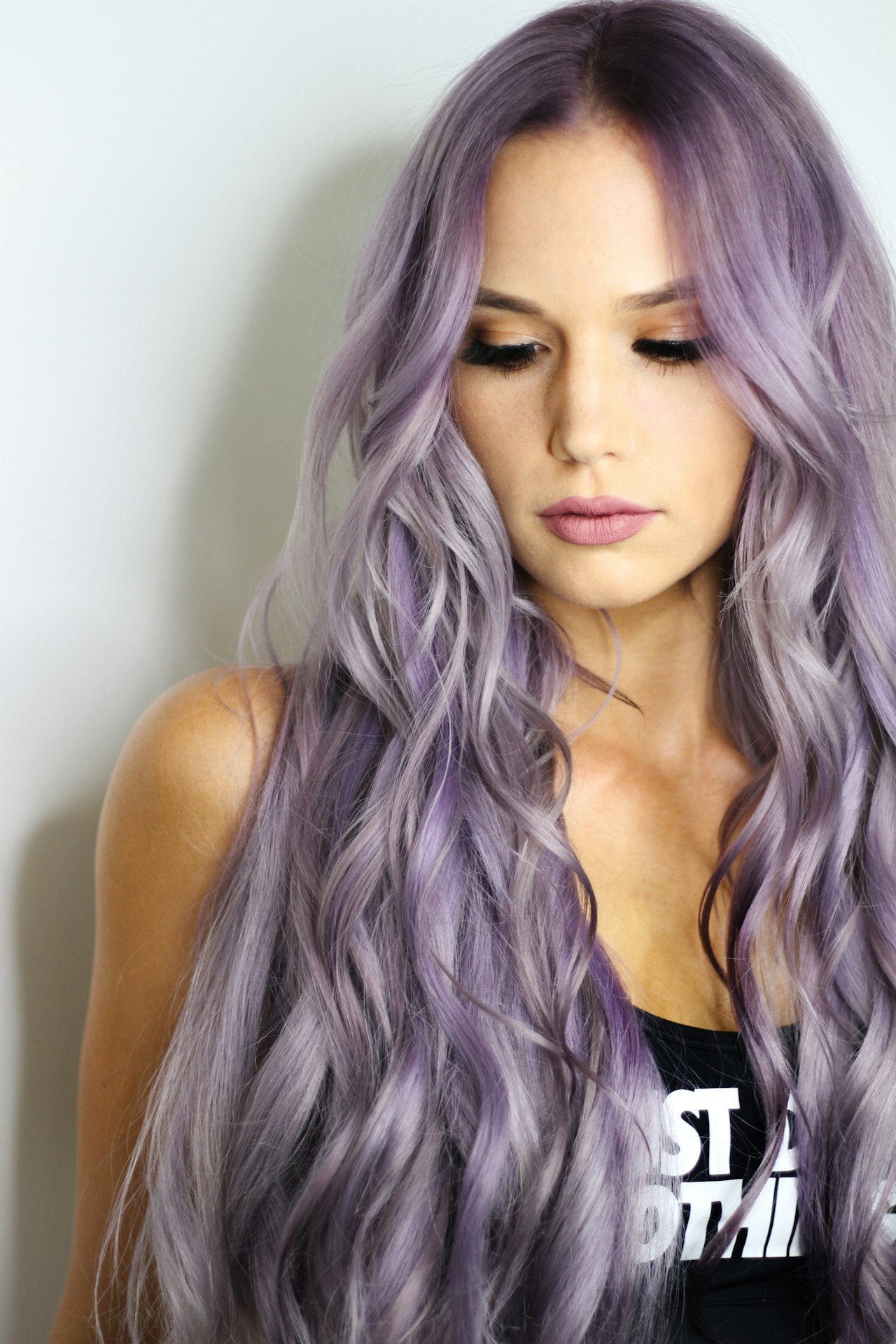
Natural hair colour is a pigment story, not a Walker-letter story. Melanocytes in the bulb pack melanin into the cortex as the shaft is built. Two chemically different melanins dominate textbooks and Britannica’s hair article: eumelanin (brown to black) and pheomelanin (yellow to red). Black and brown hair are eumelanin-heavy. Red hair is pheomelanin-heavy. Blond hair is a small amount of melanin, not a third pigment. Grey and white hair appear when that factory slows and then stops — with changes in lipids and fibre feel that people notice as coarseness.
What melanin does besides colour
Eumelanin absorbs ultraviolet light more effectively than pheomelanin. That is one reason red hair and very light blond hair can show sun damage and photobleaching faster. Robbins’ fibre-chemistry text also notes that brown-black and red pigments do not photodegrade the same way. None of this picks a curl cream. It does pick a heat-and-sun conversation on the care page.
Grey is not a type change
When melanocytes retire, the shaft can feel wiry. People then search “new hair type after forty.” Sometimes texture really has shifted with hormones and follicle miniaturisation. Often they are feeling a drier, less pigmented fibre on the same geometry. Re-run identify your hair type if the pattern truly changed on an air-dry. Do not assign a new letter just because the photo went silver.
Colour services versus natural pigment
Bleach oxidises melanin and, along the way, chews cuticle. That is a porosity event. A level-10 blond on a 4C coil is still Type 4 with a more open cuticle. Use the porosity test after a lightener, not a new Walker quiz. Dye that only deposits colour may leave porosity closer to baseline; bleach will not.
Henna, metallic dyes, and some “natural” packs complicate later chemical services. This wiki will not give a mixing recipe. A colourist who can see the shaft should.
Genes: colour is not curl
Genome-wide studies (for example Adhikari et al., 2016, on facial and scalp hair features in Nature Communications, cited in Koch et al. 2020) treat pigmentation loci and shape loci as related topics, not one slider. A red 3A and a black 3A share a spiral family and not a pigment. Do not let a product line sell you “red hair needs this curl cream.” Red hair needs whatever porosity and family it has, plus UV caution.
Lighting lies
Warm bulbs make brown look auburn. Phone filters invent highlights. Identify pigment in daylight, on clean hair, the same way you identify pattern. Then leave colour out of the type letter.
Where to go next
- Cuticle and cortex: structure
- Timing of the factory: growth cycle — pigment is laid down in anagen
- Chart letters: types hub
- Papers: sources and research notes
This page is not a dye chart and not a grey-coverage tutorial. It exists so colour stops stealing the vocabulary of type and porosity.
Frequently Asked Questions
Quick answers to the most common questions.
Does red hair belong to a special Walker type?
No. Red is pigment (pheomelanin). Type is geometry. A red head can be 1A or 4C.
Why does grey hair feel different?
Less melanin and related changes in the fibre can make it wirier and drier. That is not automatically a new curl family.
Does bleach change my hair type?
Bleach raises porosity and can make curls look looser when damaged. The follicle’s shape programme is not a new letter you shop for; repair and porosity come first.
Can diet change hair colour?
Severe deficiency can affect fibre quality. It does not turn eumelanin into pheomelanin on a healthy adult the way a box dye does. Clinical issues belong with a clinician.