
Realistic Hair Coily hair (Type 4)
Tight coils and zigzags — high shrinkage, high friction, and care that protects the strand.
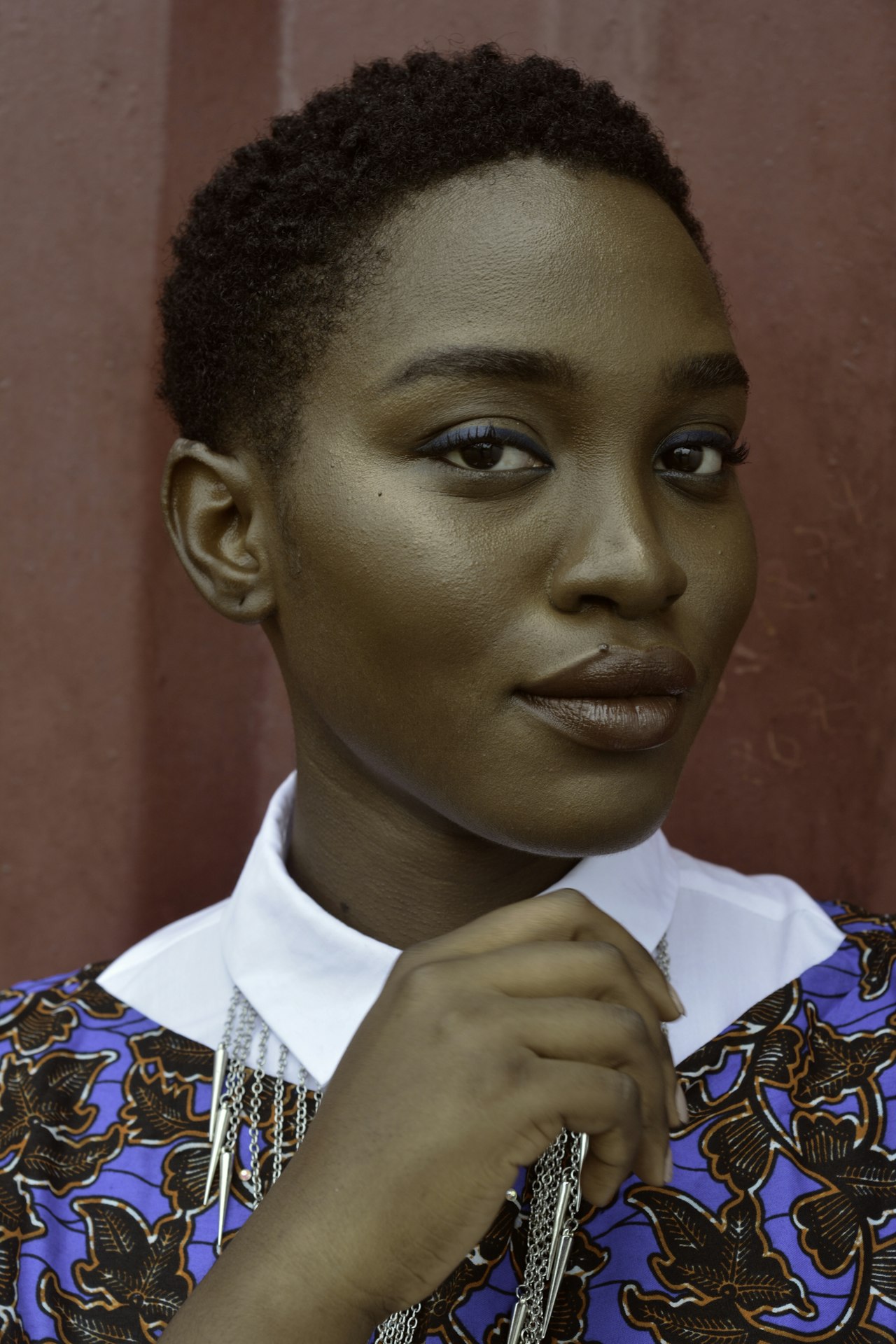
Type 4 is the coily family on the Andre Walker chart: 4A defined S- or O-shaped coils, 4B angular Z-bends, 4C densely packed zigzags with the least obvious loop until you stretch a single fibre. Community charts often quote shrinkage of 50 to 75 percent. Dry length is therefore a poor way to judge growth. The fibre is also more fragile at each bend: more turns per centimetre means more points where a comb can snag.
Walker’s 1997 book used “kinky” language that many readers now reject. This wiki uses coily for the family and keeps 4A–4C as search labels. The chart is still a styling shorthand. Forensic and anthropological papers (Koch et al., 2020; De La Mettrie et al., 2007) describe a continuum of curvature, not three moral categories. Nothing about Type 4 is “less healthy” by default. Breakage is usually mechanical plus dryness, not a failure of the follicle’s design.
4A, 4B, and 4C
4A coils are small, springy, and still readable as coils when you isolate a strand — about the width of a crochet needle on many wrap-test charts. Wash-and-gos can work when porosity and density cooperate. Definition products need more body than Type 3 creams; they also need a seal so water does not leave as fast as it entered.
4B bends at sharper angles. From a distance the pattern can look fluffy rather than coiled. Stretch a strand and you see the Z. This subtype is easy to confuse with 4C in photos. In person, 4B still shows some angular repeat; 4C may not until you pull.
4C is the tightest common label. Shrinkage is extreme. A strand may look like a densely packed zigzag with no obvious coil. Finger-detangling, lots of slip, and protective styles are the usual load-bearing advice because each extra bend is a friction site. 4C is not “hair that will not grow.” It is hair whose length lives in the coil.
If your dry hair still shows pencil-width corkscrews without stretching, you may be on curly 3C rather than 4A. Use the hair type chart and an air-dried test from identify your hair type.
Moisture in, moisture held
Coily hair has more surface area per centimetre of visible length. Water and sebum also travel less easily along a zigzag than down a straight shaft, so the ends are drier while the scalp can still produce oil. That is why Type 4 routines talk about sealing (an oil or butter over a water-based leave-in) and about not mistaking a dry length for a dry scalp.
Porosity decides the rest. Low-porosity 4C rejects heavy butter until you add warmth and time. High-porosity 4A (after bleach or heat) drinks water and is dry two hours later — that strand wants film and sometimes protein, not another water-only mist. Run the porosity test instead of copying a celebrity 4C routine blindly.
Shrinkage, tension, and breakage
A 4C style that looks two inches long can be eight inches stretched. Constant tension (tight braids, heavy extensions, daily heat) is how length disappears into breakage at the edges. Protective styles work when they reduce daily manipulation, not when they pull the follicle. Pain at the scalp is a stop sign, not a “tight enough” cue.
Detangle only with slip, from ends toward roots, on wet or very damp hair. Dry combing Type 4 is how you get a bag of broken pieces and a chart letter that looks “undefined.”
Care map for Type 4
- Cleanse the scalp on a schedule that matches your oil, not a Type 1 daily wash.
- Condition with serious slip; detangle in sections.
- Leave-in while wet, then cream, then a sealing oil if your porosity likes it (the LOC/LCO debate is really a porosity debate).
- Protective styles for stretch and convenience; take them down before the scalp complains.
- Satin or silk at night reduces friction that Type 1 barely notices and Type 4 pays for in single-strand knots.
- Full order and product-weight notes: care by type.
Language and sources
Walker’s original Type 4 description in Andre Talks Hair! was shorter than the internet’s 4A–4C grid. Later natural-hair communities, including NaturallyCurly readers, expanded the letters. LOIS (pattern plus strand feel) remains useful when Walker’s letter fails you. History of those systems: typing systems. Follicle geometry: structure. Growth timing if you are tracking shed versus loss: growth cycle.
Jump back to the types hub to compare families, or to wavy and straight only if an air-dry truly shows those shapes — relaxer and heat can fake a Type 1 photograph that is not your untreated pattern.
Frequently Asked Questions
Quick answers to the most common questions.
Does Type 4 hair grow slowly?
Scalp hair still grows on the order of a centimetre a month during anagen, with individual variation. Shrinkage hides length. Breakage from friction is what makes Type 4 look like it “does not grow.”
How do I tell 4A from 3C?
3C still looks like a corkscrew in the mirror. 4A is a smaller coil, often only obvious on a stretched strand. If both appear, you are mixed — read both pages.
Is 4C hair damaged hair?
No. 4C is a tight pattern. Damage is porosity, split ends, and breakage, which can happen on any type.
Should Type 4 avoid shampoo?
The scalp still needs cleansing. Use a gentle cleanser as often as buildup or itch demands. Co-washing alone can leave residue that then looks like dryness.